Contact Us Now
24/7/365 Emergency Service
A burst pipe can cause a shocking amount of water damage in a very short amount of time. One broken supply line, frozen pipe, failed fitting, or plumbing leak can soak flooring, walls, ceilings, cabinets, insulation, and personal belongings before you have even finished saying, “Wait, why do I hear water?”
In Spokane, Spokane Valley, Coeur d’Alene, and the surrounding Inland Northwest, burst pipe water damage is especially common during freezing weather, rapid temperature swings, and winter storms. But pipes can fail any time of year because of age, corrosion, pressure issues, appliance connections, or accidental damage.
If a pipe bursts, shut off the water supply if you can do so safely, avoid electrical hazards, move valuables away from the affected area, document the damage, and call a professional burst pipe water damage restoration team for extraction and drying. Visible water is only part of the problem—moisture can spread under flooring, behind walls, and into insulation fast.
If water is actively leaking or has already soaked walls, ceilings, or flooring, call (509) 646-7488 or contact ServiceMaster by Compass. Fast water extraction and drying can help limit damage and reduce how far moisture spreads.
Burst pipe damage is not always dramatic at first. Sometimes it is an obvious break with water pouring through a ceiling. Other times, it starts as a hidden leak inside a wall, crawl space, basement, or cabinet. Either way, the water needs to be stopped and the affected materials need to be inspected.
Freezing temperatures are one of the most common causes of burst pipes in the Spokane area. When water freezes inside a pipe, it can expand and create pressure. The pipe may split, crack, or fail at a weak point. Sometimes the damage is not obvious until the pipe thaws and water starts flowing again.
Older plumbing systems can become more vulnerable over time. Corrosion, worn fittings, weakened joints, and aging supply lines can all increase the risk of leaks or sudden failures.
Excessive water pressure can strain pipes, valves, and appliance connections. Over time, that pressure may contribute to leaks, ruptures, or failed fittings.
Washing machines, dishwashers, refrigerators, toilets, sinks, water heaters, and ice makers all rely on water supply connections. If a hose, valve, or fitting fails, water can spread quickly through the nearby room and into adjacent materials.
Renovations, drilling, moving appliances, or impact damage can crack or puncture plumbing lines. Even a small pipe leak can cause major water damage if it runs unnoticed.
For more causes of water damage around the home, visit Common Causes of Water Damage.
The first few minutes matter. Your goal is to stop more water from entering the property, avoid hazards, and begin documenting what happened. Do not worry about making the situation look perfect. This is not a magazine shoot. This is triage.
If you know where the fixture shutoff or main water shutoff is, turn the water off immediately. For a sink or toilet leak, a local shutoff may stop the problem. For a pipe break inside a wall, ceiling, basement, or crawl space, you may need to turn off the main water supply.
If you need help finding or using your shutoff, read How to Turn Off Your Main Water.
If water is near outlets, light fixtures, appliances, cords, a breaker panel, or anything plugged in, stay out of the affected area. Water and electricity are dangerous together. Do not walk through standing water if electrical systems may be involved.
If the area is safe to enter, move dry or lightly affected items away from the water. Focus on documents, electronics, furniture, rugs, and sentimental items. Do not lift heavy soaked materials or disturb anything that could be unsafe.
Take photos and videos before moving too much, if you can do so safely. Capture the source of the water, affected rooms, wet flooring, damaged ceilings, soaked belongings, and any visible plumbing failure.
A burst pipe can send water into building materials fast. Even after the visible water is cleaned up, moisture may remain behind walls, under flooring, inside cabinets, above ceilings, and in insulation. Professional drying helps reduce the risk of ongoing damage.
For professional cleanup after a broken or frozen pipe, visit Burst Pipe Water Damage Restoration. For broader water loss services, see our Water Damage Restoration page.
Burst pipe damage is sneaky because water follows gravity, seams, cavities, and whatever annoying path it can find. A leak on an upper level can travel through ceilings, wall cavities, floors, insulation, and trim before it becomes obvious.
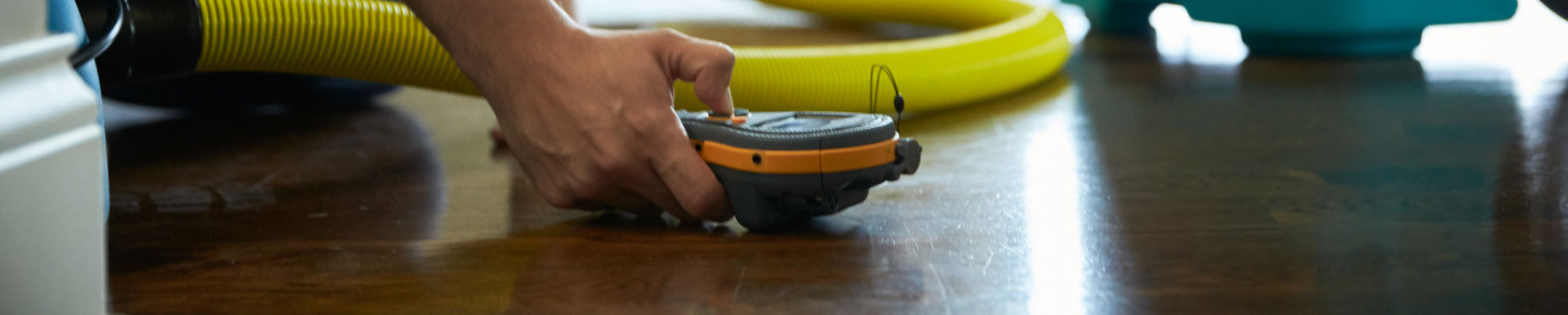
If water came from a burst pipe, moisture may remain inside materials even after the surface looks better. Moisture readings help confirm whether affected areas are actually drying.
Towels, fans, and a shop vac may help with small surface water, but they are not a full drying plan for soaked building materials. After a burst pipe, water can move into materials that need controlled drying and monitoring.
A professional water damage restoration team can inspect the affected areas, remove standing water, identify hidden moisture, set drying equipment, and monitor progress. This is especially important when water has reached drywall, flooring, cabinets, insulation, ceilings, or structural materials.
Learn more about our professional burst pipe cleanup and restoration services for homes affected by broken, leaking, or frozen pipes.
To understand the timing after water damage, see The First 24 Hours After Water Damage.
Most burst pipe situations should be treated as urgent because water can spread quickly. Some situations are especially serious and should not wait.
If you are not sure whether your situation is urgent, visit When a Situation Becomes an Emergency.
Basements often contain water heaters, utility lines, laundry connections, and exposed plumbing. A burst pipe in a basement can affect flooring, stored belongings, framing, and finished walls. If the water has reached carpet, drywall, or insulation, drying should begin quickly.
If your basement is affected, read Basement Water Damage in Spokane. If the break has already left standing water in the basement, our flood damage restoration services cover water extraction and structural drying.
When a pipe breaks above a ceiling, water can collect before it breaks through. Bulging drywall, staining, dripping, sagging, or sudden ceiling damage may mean water is trapped above you. Do not stand directly under sagging materials.
Pipes inside walls can leak for a while before the damage becomes visible. Watch for bubbling paint, soft drywall, warped baseboards, new stains, or a sudden musty smell. Hidden water damage should be inspected before it spreads further.
For more warning signs, visit Signs of Hidden Water Damage.
You cannot prevent every plumbing failure, but you can lower the risk—especially during cold weather. Spokane winters have a way of finding the weak spots in a building. Rude, but consistent.
For more prevention guidance, read Repairing Burst Pipes and Protecting Your Home From Water Damage.
Insurance coverage depends on your policy and the cause of the damage. Many policies treat sudden and accidental plumbing failures differently than long-term leaks, neglected maintenance, or outside flooding. The important thing is to document the damage, stop the source if possible, and contact your insurance provider with questions about your specific coverage.
Restoration documentation can be helpful during the claims process because it shows affected areas, drying steps, and moisture conditions. Take photos, keep records, and do not throw away damaged materials unless your insurance provider or restoration team advises you to do so.
For local insurance guidance, read Does Homeowners Insurance Cover Water Damage in Spokane?.
Different water losses require different cleanup and restoration approaches. ServiceMaster by Compass provides specialized services for several common residential water emergencies.
A burst pipe can feel chaotic, but the right first steps make a real difference. Shut off the water, avoid electrical hazards, protect valuables only if it is safe, document the damage, and get the affected areas inspected and dried properly.
ServiceMaster by Compass helps homeowners, property owners, and businesses in Spokane, Spokane Valley, Coeur d’Alene, and nearby communities respond to burst pipe water damage with water extraction, drying, cleanup, and restoration support.
If a broken or frozen pipe has already damaged your property, see our burst pipe water damage restoration services for the professional cleanup process, or visit our main water damage restoration page for other water-loss services.
If a broken pipe has soaked your home or business, call (509) 646-7488 or contact us online. We’ll help you stop the water damage from becoming a bigger problem.