Contact Us Now
24/7/365 Emergency Service
Basement water damage has a special talent for showing up at the worst possible time. After heavy rain, rapid snowmelt, a sump pump failure, a plumbing leak, or water seeping through a foundation, your basement can go from “probably fine” to “why is the floor making ocean noises?” very quickly.
If you find water in your basement, the first steps matter. The faster you stop the source, protect yourself, remove standing water, and start professional drying, the better your chances are of preventing damage to flooring, drywall, insulation, framing, belongings, and indoor air quality.
If your basement has standing water, active seepage, wet drywall, soaked carpet, or water near electrical systems, treat it as an urgent water damage situation. Stop the source if you can do so safely, avoid contaminated water, move valuables only if safe, and call a professional water damage restoration team for extraction, drying, and moisture inspection.
If water is actively entering your basement or you already have standing water, call (509) 646-7488 or contact ServiceMaster by Compass. Basement water damage can spread behind walls, under flooring, and into hidden materials faster than it looks.
Basements in Spokane, Spokane Valley, and the surrounding Inland Northwest can take on water for several reasons. Sometimes it is a sudden plumbing failure. Other times, it is a slow drainage or foundation issue that finally becomes obvious during rain, thawing, or a storm.
When gutters are clogged, downspouts discharge too close to the foundation, or the yard slopes toward the home, water can collect around the basement walls. Once the soil becomes saturated, that pressure can push moisture through cracks, joints, window wells, or weak points in the foundation.
If heavy rain or outside water has already caused standing water in your basement, learn more about our flood damage restoration services.
Snowmelt can be sneaky. A slow thaw may not seem dramatic, but it can keep the ground wet for long periods. If drainage is poor or the foundation already has vulnerable areas, water can begin seeping into the basement before homeowners realize there is a problem.
A sump pump is supposed to move water away before it becomes a basement flood. If the pump fails, loses power, becomes clogged, or cannot keep up with incoming water, the basement can take on water quickly.
Once a sump pump failure results in standing water, professional flooded basement cleanup can help remove the water and dry affected materials.
Not all basement water damage comes from outside. Broken pipes, leaking supply lines, failed water heaters, appliance leaks, and drain backups can all release water into a basement. If the water source is plumbing-related, shut off the water supply if you can do so safely.
For pipe-specific cleanup guidance, see Burst Pipe Water Damage in Spokane. If a broken or frozen pipe has already damaged your home, our burst pipe water damage restoration page explains the professional cleanup and drying process.
When you discover water in the basement, do not start by grabbing towels and charging in like a heroic mop wizard. Start with safety. Basement water can involve electricity, structural materials, contaminated water, and hidden damage.
If standing water is near outlets, cords, appliances, the electrical panel, or anything plugged in, do not enter the water. Leave the area and call for professional help. Water and electricity are not a “let’s see what happens” situation.
If the water is coming from a plumbing line, appliance, toilet, water heater, or pipe, shut off the water at the source or at the main shutoff. If you are not sure where the main water shutoff is, review How to Turn Off Your Main Water.
If water may involve sewage, drain backup, floodwater, or water that has passed through unknown materials, avoid contact. Do not let children or pets enter the area. Basement water is not always clean, even if it looks clear.
If you are dealing with sewage or drain backup, read Safe Sewer Backup Protocols. For professional contaminated-water removal, sanitization, and drying, see our sewage backup cleanup services.
If the area is safe to enter, move dry or lightly affected belongings out of the basement. Focus on documents, electronics, sentimental items, and anything sitting directly on the floor. Do not lift heavy soaked materials or walk through water if you are unsure about contamination or electrical risk.
Basement water damage often needs more than surface cleanup. Carpet padding, drywall, trim, insulation, subflooring, and framing can hold moisture even after the visible water is gone. Professional water extraction and structural drying help remove water from affected materials and reduce the risk of lingering damage.
The biggest mistake with basement water damage is assuming that “dry to the touch” means dry. It does not. Basement materials can trap moisture behind finished walls, under flooring, inside insulation, and along baseboards.
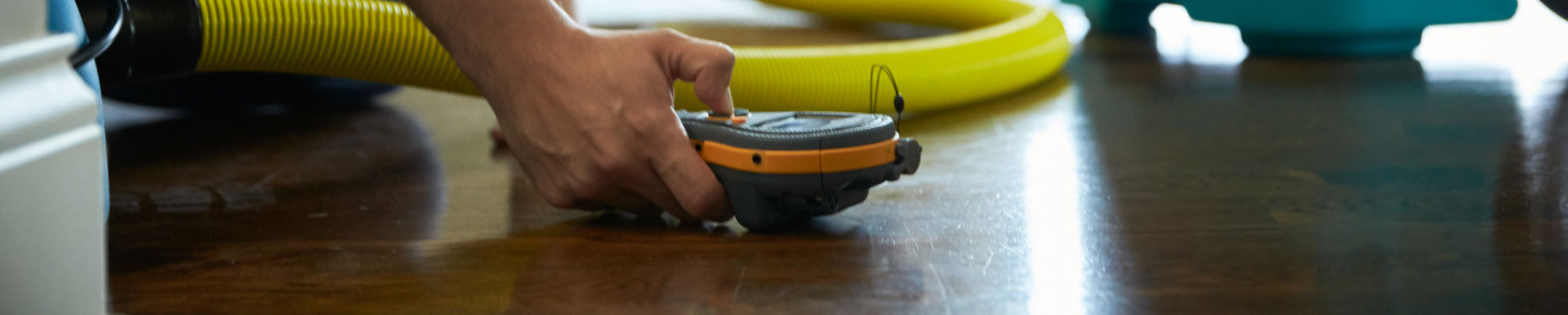
Professional restoration teams use moisture meters, extraction equipment, air movers, and dehumidifiers to identify and dry affected materials. That matters because hidden moisture can create ongoing odor, staining, swelling, material breakdown, and secondary damage.
If water reached walls, flooring, or stored materials, the surface may look better before the structure is actually dry. Moisture readings help confirm what is happening underneath and behind what you can see.
Some basement water problems can be monitored briefly. Others need immediate action. If water is active, spreading, contaminated, or close to electrical systems, do not wait.
A basement filled by rain, snowmelt, or sump pump failure may require emergency flood damage cleanup, while a plumbing failure may require burst pipe water damage restoration.
If you are unsure whether the situation is urgent, visit When a Situation Becomes an Emergency. When in doubt, it is safer to ask early than to discover hidden water damage later.
Every basement water damage job is different, but the cleanup process usually follows the same general path: safety, inspection, extraction, drying, monitoring, and restoration planning.
A restoration team checks where the water came from, how far it spread, what materials were affected, and whether moisture has moved behind finished surfaces. This helps determine what needs to be dried, removed, cleaned, or monitored.
Standing water and excess moisture are removed using extraction equipment. Removing water quickly helps reduce how deeply moisture moves into flooring, drywall, and structural materials.
Air movers and dehumidifiers are used to dry affected areas. Because basements naturally tend to hold more moisture than upper levels, controlled drying is especially important.
Drying should be monitored with moisture readings. This helps confirm whether materials are actually drying instead of just looking better on the surface.
Once the area is dry, damaged materials can be addressed. Depending on the situation, this may involve cleaning, deodorizing, removing unsalvageable materials, or planning repairs.
For a broader look at professional cleanup, visit Water Damage Restoration.
You cannot prevent every basement leak or flood, but you can reduce risk. Basement water prevention is mostly about drainage, maintenance, plumbing awareness, and catching small warning signs before they become expensive little gremlins.
For more regional prevention tips, see Seasonal Risks in Spokane & Coeur d’Alene and Protecting Your Home From Water Damage.
Insurance coverage depends on the cause of the basement water damage and the details of your policy. Sudden plumbing failures may be handled differently than groundwater seepage, drain backup, or flooding from outside the home.
If you are dealing with basement water damage, document the situation with photos, keep records of what happened, and contact your insurance provider with questions about coverage. A restoration company can help document affected materials and the drying process.
For more on coverage questions, read Does Homeowners Insurance Cover Water Damage in Spokane?.
The right restoration approach depends on where the water came from. ServiceMaster by Compass provides specialized cleanup and restoration for several common residential water emergencies.
Basement water damage is stressful, but fast action makes a real difference. The sooner water is removed and affected materials are properly dried, the better your chances of limiting damage and protecting your home.
ServiceMaster by Compass helps homeowners and property owners in Spokane, Spokane Valley, Coeur d’Alene, and nearby areas respond to water damage with inspection, extraction, drying, and restoration support.
If your basement has flooded after rain, snowmelt, or sump pump failure, our flood damage restoration team can handle extraction and drying. If the water came from damaged plumbing, see our burst pipe restoration services.
If your basement is wet, flooded, or showing signs of hidden moisture, call (509) 646-7488 or contact us online. We’ll help you figure out what happened, what needs to be dried, and what to do next.