Does Homeowners Insurance Cover Water Damage in Coeur d'Alene? What You Need to Know
WATER DAMAGE INSURANCE COVERAGE FOR COEUR D'ALENE & NORTH IDAHO HOMEOWNERS
What's Covered, What's Not, and How to File a Strong Claim
Coeur d'Alene homeowners face some unique water damage risks — hard winters with frozen pipes, heavy spring snowmelt, proximity to Lake Coeur d'Alene and the Spokane River, and aging infrastructure in older neighborhoods. When damage happens, the first question is almost always the same: is this covered?
The answer depends entirely on how the water got in. This guide breaks down what standard homeowners insurance typically covers in North Idaho, what's excluded, and how to build a strong claim when you need to file one.
Dealing with active water damage right now? Call (509) 535-5440 for 24/7 water damage mitigation serving Coeur d'Alene and all of North Idaho.
WHAT DOES HOMEOWNERS INSURANCE TYPICALLY COVER FOR WATER DAMAGE IN COEUR D'ALENE?
Sudden and Accidental Damage Is Usually Covered
The phrase that matters most in any homeowners policy is "sudden and accidental." In North Idaho, that distinction plays out in very specific ways — a pipe that freezes and bursts overnight is typically covered; a pipe that's been slowly corroding for two years is not.
Water damage scenarios typically covered by homeowners insurance in North Idaho
- Frozen and burst pipes: One of the most common winter claims in Coeur d'Alene. When a pipe freezes and bursts suddenly, the resulting water damage is generally covered under a standard policy — as long as the home was properly heated and the pipe failure wasn't due to known neglect.
- Appliance failures: A water heater that cracks, a washing machine hose that gives out, or a dishwasher that malfunctions and floods your kitchen are typically covered as unexpected mechanical failures.
- Accidental overflow: A bathtub, sink, or toilet that overflows and causes damage to floors or ceilings below is usually covered as long as it wasn't the result of ongoing neglect.
- Storm-related roof damage: If a North Idaho winter storm damages your roof and water enters as a direct result, both the roof repair and the resulting interior water damage are typically covered.
- Ice dam damage: Ice dams — a common problem in North Idaho — can force water under shingles and into walls or ceilings. Many policies cover the resulting interior damage, though coverage for the dam removal itself varies.
When you're not sure whether damage qualifies, call your insurer first — and call a restoration company to stabilize the situation before it gets worse. Call (509) 535-5440 for immediate help.
WHAT IS NOT COVERED BY STANDARD HOMEOWNERS INSURANCE IN NORTH IDAHO?
Exclusions That Catch Coeur d'Alene Homeowners Off Guard
North Idaho's geography creates real flood and water seepage risks that a standard homeowners policy simply doesn't cover. Knowing these gaps before you need them is the difference between a covered claim and a very expensive surprise.
Common water damage exclusions in standard policies
- Lake and river flooding: Properties near Lake Coeur d'Alene, the Spokane River, or other waterways are at real risk of external flooding — and standard homeowners insurance covers none of it. Rising water from any external source requires a separate flood insurance policy.
- Snowmelt surface flooding: When heavy spring snowmelt runs across the ground and enters your home through doors, windows, or foundation gaps, it's typically treated as surface flooding — excluded from standard coverage.
- Gradual leaks and deferred maintenance: A slow drip behind a wall, a chronically leaking roof, or a pipe showing visible corrosion that was never addressed — these are maintenance failures, not covered events. Insurers expect homeowners to address known issues before they cause major damage.
- Sewer and drain backup: Water backing up through floor drains, toilets, or sinks due to a sewer line issue is excluded from most standard policies. This coverage is usually available as a low-cost endorsement.
- Groundwater and foundation seepage: Water pressing through basement walls or a crawl space due to soil saturation is generally treated as a structural or moisture issue — not a covered water event.
- Mold from delayed response: If mold develops because damage wasn't addressed promptly, many policies will limit or deny mold remediation coverage. Fast action protects both your home and your claim.
FLOOD RISK IN COEUR D'ALENE: WHY A SEPARATE POLICY MATTERS
Lake Proximity, Snowmelt, and Spring Flooding
Coeur d'Alene sits alongside one of Idaho's largest and most beautiful lakes — and that proximity comes with real flood exposure, especially in spring. Snowmelt from the surrounding mountains can raise lake and river levels significantly, and neighborhoods close to the water or in low-lying areas can see surface flooding that a standard homeowners policy won't touch.
Flood insurance options for Coeur d'Alene homeowners
- National Flood Insurance Program (NFIP): Federally backed flood insurance available in participating communities across North Idaho. Covers the structure up to $250,000 and contents with a separate policy. If your property is in a FEMA-designated flood zone, your lender may require it.
- Private flood insurance: Private insurers often offer higher coverage limits, faster claims, and broader definitions of covered flood events than the NFIP. Worth comparing if you're in a higher-risk area or have a higher-value property.
- Sewer backup endorsements: Ask your current insurer about adding a sewer or water backup rider — it's frequently one of the most affordable policy additions and covers one of the most common and expensive household water events.
Not sure what your policy covers? Review your declarations page and talk to your agent now — before you need to file. And if damage has already happened, call (509) 535-5440 — we work with all major insurers serving North Idaho.
HOW TO FILE A WATER DAMAGE INSURANCE CLAIM IN COEUR D'ALENE
Steps That Give Your Claim the Best Possible Outcome
A well-documented claim filed promptly is far more likely to be approved — and approved for the full amount — than one filed late with incomplete records. Here's how to approach it from the first minutes after damage occurs.
Step one: Document before you clean up anything
- Take photos and video of every affected room, wall, floor, and ceiling before anything is moved, dried, or removed.
- Capture the source of the damage if visible — the burst pipe, the cracked appliance, the roof opening, the ice dam.
- Create a written inventory of damaged belongings with estimated values and, where possible, purchase receipts or photos.
Step two: Mitigate further damage — but don't over-repair
- Most policies require you to take reasonable steps to prevent additional damage. Start drying, remove standing water, and cover any roof openings if it's safe to do so.
- Do not make permanent repairs before your adjuster has inspected. Temporary mitigation is expected and required — full reconstruction before inspection can complicate your claim significantly.
Step three: Notify your insurer promptly
- Report the damage as soon as possible. Most policies require timely notification — delays can give insurers grounds to reduce or deny a claim.
- Get your claim number and adjuster's name in writing. Keep detailed notes on every conversation, including dates and times.
- Request a copy of your full policy if you don't have one — you have a right to know exactly what you're covered for before negotiations begin.
Step four: Bring in a certified restoration company
- A professional restoration company provides moisture readings, drying logs, and written damage reports — documentation your adjuster will use to assess the scope and cost of the claim.
- Restoration professionals understand what insurers need and can help ensure nothing is overlooked or underdocumented.
- Acting fast on mitigation also demonstrates good faith to your insurer, which consistently supports stronger claim outcomes.
WATER DAMAGE COVERAGE IN NORTH IDAHO: QUICK REFERENCE
What's Typically Covered vs. Excluded
| Water Damage Type | Typically Covered? | Notes |
|---|
| Frozen / burst pipe | Yes | Must be sudden; home must have been heated |
| Appliance failure | Yes | Unexpected malfunction, not wear and tear |
| Ice dam interior damage | Yes (usually) | Interior damage typically covered; dam removal varies |
| Storm roof damage + leak | Yes | Must result from direct storm damage to roof |
| Gradual / slow leak | No | Considered a maintenance failure |
| Lake / river flooding | No | Requires separate flood insurance policy |
| Snowmelt surface flooding | No | Treated as external flooding; not covered |
| Sewer / drain backup | No (usually) | Available as endorsement on many policies |
| Foundation / groundwater seepage | No | Structural / moisture issue, not a covered event |
WATER DAMAGE RESTORATION IN COEUR D'ALENE & NORTH IDAHO — WE WORK WITH YOUR INSURANCE
Fast Response. Thorough Documentation. All Major Insurers.
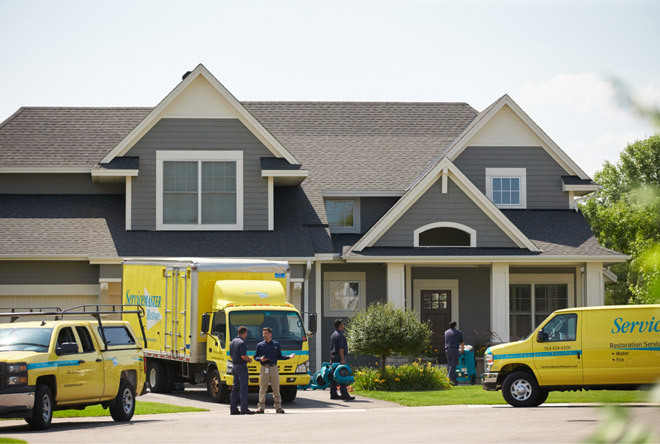
When water damage happens in North Idaho, response time matters — and so does documentation. At ServiceMaster by Compass, we provide professional mitigation, thorough moisture documentation, and written reports that support your insurance claim from day one.
We serve Coeur d'Alene, Post Falls, Hayden, Rathdrum, and surrounding North Idaho communities, and we work directly with all major insurance providers. When water damage happens, we can be on-site quickly to stabilize your home and start the restoration process — so the damage stops spreading and your claim is backed by professional documentation.